
Versión en Español
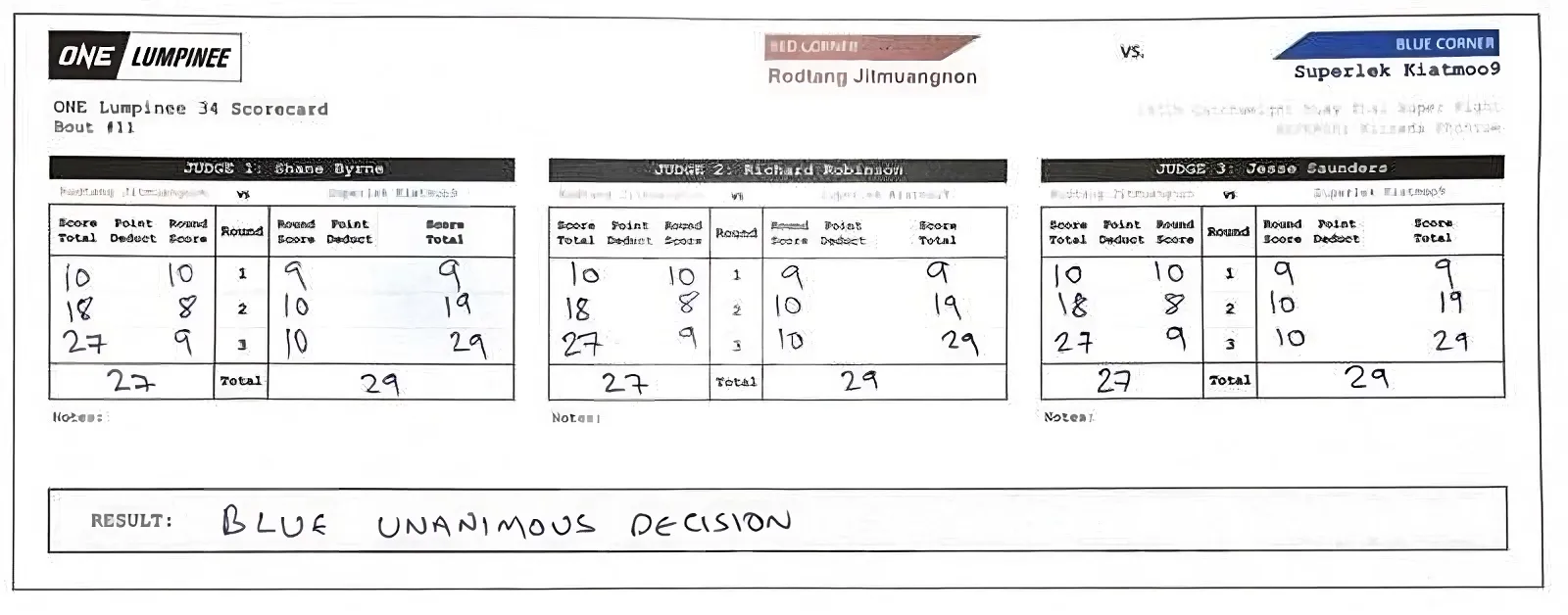
El muy esperado enfrentamiento entre los titanes del Muay Thai, Rodtang y Superlek, una pelea marcada por estilos contrastantes, el fervor de los aficionados e incluso un problema de peso para Superlek, finalmente ofreció una actuación memorable. Aunque un corte significativo en el rostro de Superlek llevó a algunos a creer que la pelea fue mucho más reñida, o que Rodtang debió haber ganado, un análisis técnico más profundo revela el innegable control de Superlek durante todo el combate. Este desglose ilustrará que las primeras impresiones pueden ser, de hecho, engañosas.
ASALTO 1
El asalto más fuerte de Rodtang comenzó con «The Iron Man» conectando una serie de codazos que abrieron un gran corte en Superlek, seguido de un barrido. Sin embargo, durante la mayor parte del asalto, Superlek identificó sistemáticamente las vulnerabilidades de Rodtang, las cuales explotaría más tarde. Rodtang reaccionó a las fintas, cedió terreno a las patadas y mostró indecisión ante las rodillas y los intentos de clinch de Superlek.
A pesar de que el rostro de Superlek sangraba profusamente, defendió inteligentemente los ataques de codo de Rodtang, a menudo obligando a Rodtang a fallar o a conectar sin impacto total, incluso mientras la multitud vitoreaba cada uno de los potentes balanceos de brazo de Rodtang. Superlek también conectó consistentemente patadas frontales (teeps) y otras patadas. Cabe destacar que Rodtang mostró sus habilidades defensivas redirigiendo una patada hacia un bloqueo con la espinilla, demostrando que es más que un simple «brawler».
Si bien Superlek fue más consistente en la puntuación, Rodtang ganó este asalto debido al daño significativo del corte, que, según los criterios de puntuación de ONE, es un factor crucial.
ASALTO 2
En el segundo asalto, Superlek, guiado por la astuta estrategia de su esquina, capitalizó las debilidades identificadas en el primer asalto. Su clave para el éxito fue un control de manos superior. Al gestionar las manos de Rodtang, Superlek no solo bloqueó posibles golpes y codazos, sino que también creó oportunidades para sus propios ataques o entradas al clinch. La incomodidad de Rodtang era evidente, ya que fue repetidamente empujado contra las cuerdas, lo que permitió a Superlek conectar libremente patadas y rodillas.
Rodtang intentó ajustarse lanzando ganchos de izquierda amplios, pero el control de manos de Superlek neutralizó rápidamente estos esfuerzos. Superlek intercambió eficazmente tres rodillazos largos por un gancho de Rodtang que apenas rozó. Pronto, mejoró su control a control de muñecas, una táctica facilitada por los pequeños guantes de 4 onzas. Esto le dio un control superior, previniendo los ganchos amplios de Rodtang y sirviendo como un sistema de alerta temprana. El control de muñecas también permitió a Superlek empujar a Rodtang hacia atrás y preparar entradas al clinch, a menudo conectando rodillazos desde una posición dominante.
Este control acumulativo finalmente llevó a un derribo. Aunque discutido por Rodtang, este perdió claramente el equilibrio, doblándose y girándose, una reacción involuntaria para un campeón. Aquellos familiarizados con el Muay Thai entienden que los peleadores a menudo muestran dureza para señalar a los jueces que no están heridos. Rodtang sí aumentó su intensidad, conectando algunos golpes que rozaron. Sin embargo, los esquives defensivos de Superlek fueron más efectivos que la capacidad de Rodtang para absorber golpes, lo que a veces hacía parecer que Rodtang estaba ganando los intercambios.
ASALTO 3
El asalto final mostró la culminación de la brillantez táctica de Superlek y su dominio completo. Casi todos los intercambios siguieron un patrón similar: Superlek obtenía ventaja desde la distancia con fintas, golpes o control de muñecas, conectaba golpes mientras esquivaba hábilmente los ganchos y codazos de Rodtang, y luego utilizaba el clinch para rodillazos o golpes de derecha.
Rodtang ocasionalmente mostró su espíritu de lucha, notablemente con un gancho de izquierda bien sincronizado seguido de un barrido. Sin embargo, estos momentos fueron inconsistentes. Durante más de la mitad del asalto, Rodtang estaba claramente a la defensiva, incapaz de atacar sin ser contragolpeado o forzado a retroceder. Superlek había descifrado eficazmente el timing de Rodtang y controló todos los rangos de la pelea, conectando rodillazos significativos después de doblar a Rodtang, una jugada de alta puntuación en Muay Thai.
RESUMEN
Más allá del corte inicial, la pelea no fue particularmente reñida. A medida que avanzaba el combate, Superlek se sintió cada vez más cómodo y audaz al explotar las dificultades constantes de Rodtang con:
- Fintas
- Entradas y salidas del clinch
- Movimiento de cabeza
- Patadas
- Ganar los intercambios de manera decisiva
- Control agresivo de manos y muñecas
Estos aspectos del juego de Superlek se hicieron cada vez más evidentes, sin embargo, Rodtang luchó por encontrar una respuesta consistente. Si bien Rodtang hizo algunos ajustes notables en el timing de sus ganchos, codazos y barridos, fueron demasiado infrecuentes. La reputación y el lenguaje corporal impasible de Rodtang, combinados con la sutil maestría técnica de Superlek, hicieron que la pelea fuera difícil de juzgar para los espectadores ocasionales. Rodtang nunca estuvo fuera de la pelea, pero rara vez estuvo en la delantera.
En una posible revancha, se espera que Rodtang rinda mejor, especialmente si ambos peleadores dan el peso correctamente. «The Iron Man» podría representar una mayor amenaza si estuviera mejor preparado para el uso del control de manos o muñecas de Superlek, y si estudiara la tendencia de Superlek a esquivar los ataques a la parte superior del cuerpo. Rodtang sería inteligente al anticipar los rápidos cambios de fase de combate de Superlek (el latigazo de patadas de larga distancia a codazos y clinch y de vuelta) que parecieron tomarlo por sorpresa. La durabilidad y la «cara de póker» de Rodtang le sirvieron bien a ojos de los aficionados, pero no fueron suficientes para los jueces o los veteranos más experimentados. Pero con las lecciones aprendidas, las cosas podrían desarrollarse de manera muy diferente en una revancha.
English Version (Rephrased)
Detailed Analysis: Superlek`s Dominance Over Rodtang at ONE Friday Fights 34
The much-anticipated clash between Muay Thai titans Rodtang and Superlek, a fight marked by contrasting styles, fan fervor, and even a weight cut issue for Superlek, ultimately delivered a memorable performance. While a significant cut on Superlek`s face led some to believe the fight was much closer, or that Rodtang should have won, a deeper technical analysis reveals Superlek`s undeniable control throughout the bout. This breakdown will illustrate that first impressions can indeed be misleading.
ROUND 1
Rodtang`s strongest round began with «The Iron Man» landing a series of elbows that opened a large cut on Superlek, followed by a sweep. However, for most of the round, Superlek systematically identified Rodtang`s vulnerabilities, which he would exploit later. Rodtang reacted to feints, ceded ground to kicks, and displayed hesitation against Superlek`s knees and clinch attempts.
Despite Superlek`s face bleeding profusely, he intelligently defended against Rodtang`s elbow attacks, often forcing Rodtang to miss or land without full impact, even as the crowd cheered loudly for every one of Rodtang`s powerful arm swings. Superlek also consistently landed teeps and kicks. Notably, Rodtang showcased his defensive skills by redirecting a kick into a shin shield, demonstrating he`s more than just a brawler.
While Superlek was more consistent in scoring, Rodtang won this round due to the significant damage from the cut, which, according to ONE`s scoring criteria, is a crucial factor.
ROUND 2
In the second round, Superlek, guided by his corner`s astute strategy, capitalized on the weaknesses identified in the first round. His key to success was superior hand control. By managing Rodtang`s hands, Superlek not only blocked potential punches and elbows but also created opportunities for his own attacks or clinch entries. Rodtang`s discomfort was evident as he was repeatedly pushed towards the ropes, allowing Superlek to freely land kicks and knees.
Rodtang attempted to adjust by throwing looping left hands, but Superlek`s hand control quickly neutralized these efforts. Superlek effectively traded three long knees for one glancing hook from Rodtang. He soon upgraded to wrist control, a tactic facilitated by the small 4-ounce gloves. This gave him superior control, preventing Rodtang`s looping punches and serving as an early warning system. Wrist control also allowed Superlek to push Rodtang back and set up clinch entries, often landing knees from a dominant position.
This cumulative control eventually led to a knockdown. Although debated by Rodtang, he clearly lost his footing, buckling and turning away—an involuntary reaction for a champion. Those familiar with Muay Thai understand that fighters often display toughness to signal to judges they are not hurt. Rodtang did increase his intensity, landing some glancing blows. However, Superlek`s defensive rolls were more effective than Rodtang`s ability to absorb hits, which sometimes made it appear Rodtang was winning exchanges.
ROUND 3
The final round showcased the culmination of Superlek`s tactical brilliance and complete dominance. Almost every exchange followed a similar pattern: Superlek gained an advantage from the outside with feints, strikes, or wrist control, landed hits while skillfully ducking Rodtang`s hooks and elbows, and then utilized the clinch for knees or overhand rights.
Rodtang occasionally showed his fighting spirit, notably with a well-timed left hook followed by a sweep. However, these moments were inconsistent. For more than half of the round, Rodtang was clearly on the back foot, unable to aggress without being countered or forced to retreat. Superlek had effectively deciphered Rodtang`s timing and controlled all ranges of the fight, landing significant knees after folding Rodtang—a high-scoring move in Muay Thai.
SUMMARY
Beyond the initial cut, the fight was not particularly close. As the bout progressed, Superlek grew increasingly comfortable and daring in exploiting Rodtang`s consistent difficulties with:
- Feints
- Clinch entries and exits
- Head movement
- Kicks
- Winning exchanges decisively
- Aggressive hand and wrist control
These aspects of Superlek`s game became increasingly evident, yet Rodtang struggled to find a consistent answer. While Rodtang made some notable adjustments in timing his hooks, elbows, and sweeps, they were too infrequent. Rodtang`s reputation and stoic body language, combined with Superlek`s subtle technical mastery, made the fight hard to judge for casual viewers. Rodtang was never out of the fight, but he was rarely in the lead.
In a potential rematch, Rodtang is expected to perform better, especially if both fighters make weight correctly. «The Iron Man» could pose a greater threat by better preparing for Superlek`s hand and wrist control, and by studying Superlek`s tendency to duck upper-body attacks. Rodtang would benefit from anticipating Superlek`s rapid shifts between long-range kicks, elbows, and clinching, which seemed to catch him off guard. While Rodtang`s durability and poker face impressed fans, they were insufficient for the judges or seasoned veterans. But with lessons learned, a rematch could unfold very differently.